India’s Silent Revolution

India’s Silent Revolution…

A silent revolution is happening inside India. A revolution that is led by India’s leading minds. And they are putting their biggest investments behind the revolution – ideas, time and money. The revolution is working for providing world-class education to India’s children in rural areas. People across the board are working towards providing quality education for India’s poor and underprivileged children.

Anupama Nayar and Vineet Nayar created Sampark Foundation to provide innovation led large-scale changes in primary school education. The ex-CEO of HCL Technologies and his wife have impacted the lives of 3 million children in 50,000 schools in Indian states of Uttarakhand, Jammu & Kashmir and Chattisgarh so far. They have committed to invest USD 100 million (INR 650 crores) and improve quality of education for 10 million children by 2020.

After researching the key issues in primary education in India and studying Global Best Practices, they have initiated audio-visual driven learning methods. Sampark Didi helps to improve the English and Maths basic skills for students and teachers.

Children love smartphones and tablets. Digital learning technologies can be an interesting catalyst for improving education. One such example is EkStep

Nandan Nilekani – Time’s Global Influential Thinker, Architect of India’s National Identity Project Aadhar and ex-CEO of InfoSys has founded EkStep Foundation. It is a non-for-profit foundation that aims to extend learning opportunities to millions of Indian children through a collaborative, universal platform that facilitates creation and consumption of educational content. Nandan, Rohini Nilekani and Shankar Maruwada are co-founder and have the leadership team that was instrumental in developing the Aadhar Project.

The Nilekanis have started with an initial commitment of USD 10 million and gamified Apps. EkStep Genie is a meta-app for creation and dissemination of gamified content.

Azim Premji Foundation is working with 350,000 schools across 8 different states of India. Apart from research and development of content, it is working with Governments to improve the approach and outcomes of education. It is also establishing its own schools.

The above initiatives are about the primary and basic education. India’s stock market expert Rakesh Jhunjhunwala and other foundations are working towards building curiosity and scientific appreciation amongst India’s generation next. Agastya Foundation runs one of the largest hands-on science education programs for children and teachers in the world. Agastya’s mission is “to spark curiosity, nurture creativity and instill confidence” in economically disadvantaged children and government schoolteachers by bringing innovative hands-on science education and peer-to-peer learning to government schools and villages across India.

It has 175+ Mobile Science Vans which take science education to the village doorstep and 74+ Science Centers for disadvantaged children. It also has a 172-acre Creativity Lab campus in Andhra Pradesh and 313 Night Village Schools.

Apart from these, there are several other initiatives – Mittals’ Bharti Foundation, Education Alliance, Central Square (founded by ex-ChrysCapital’s Ashish Dhawan), Pratham etc.

Truly, the scale and execution of the above ideas is impressive. Even if a tiny percentage of the above efforts is successful, it will create a great impact.

Fruits of education will take a few years to bear fruit, but they yield results at the right time when India’s economic leadership will be significant. And these children bring a new perspective to India’s future and transform India.

Connected Cars – Drive The Future. Today

Connected Cars – Drive The Future. Today.

The invention of wheel has been an important invention of the human ingenuity that has created multiple scientific and business opportunities. Cars have been as much a necessity as a personal statement.

Today cars are technology products. The evolution of car from a manufacturing to electrical to software product has been meteoric. The Car economy is driving towards being a service economy rather than a product one. OEMs are no longer interested in one-time sale of the car – they are looking at a confined steam of lifetime revenues and services. In the fact the price of the future cars will be highly subsidised and services may give more revenues – The Gillette Pricing model.

Car Manufacturers need the help of other players to create a wholistic Connected Car Ecosystem – an Ecosystem where connected cars talk to each, city infrastructure and internet via multiple technological ways. The Connected Car Ecosystem represents a great opportunity for all the stake-holders including consumer.

Connected Car is an emerging reality. All Major OEMs are working on designing and rolling out newer and better use cases for Connected Car. They are working with unlikely partners as they navigate the future of cars. OEMs are open for help from software developers and testing organisations to accelerate their solutions to the market.

Infotainment is a big area where Connected Car technologies have made the first impact – which is obvious and understandable as it represents easy monetisation and quick adoption. A few Insurance companies have leveraged Apps/OBD Data/Telematics for better insurance premiums and information. Innovative and interesting new use-cases are emerging with the confluence of IoT, Mobile and Digital Technologies. A few are:

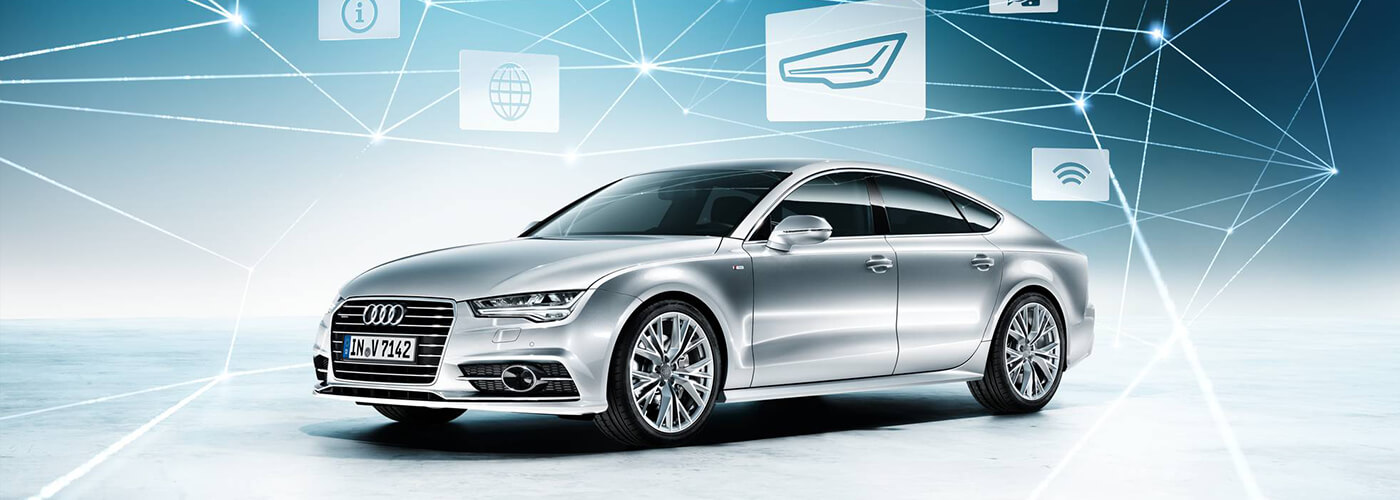
1. Connected Cities: The Smart city can light only those street lights where the car is driving through. It means energy efficiency. The traffic management can be better planned based on the flow of current traffic. Roads that need immediate attention can be quickly determined. Audi has already announced the integration of street traffic light information on the car dashboard.
2. Connected Payments: Cars can update one about the best prices at the fuel stations. Going forward, the payment can be made seamlessly for those fuel recharges. The Connected Car can also make the payment for those drive-through gelatos and French fries.
3. Safety: Cars can be monitored to drive along pre-determined and optimal routes – any out of normal behaviour can trigger safety alarms and alerts. The car can equally detect the rightful owner through behaviour analytics. Similarly, cars can detect driver drowsiness or health issues and trigger relevant actions thereby ensuring safety. A driver’s heart attack can automatically stop the car and initiate SOS call.
4. Better Care: Advanced Diagnostics help to take preventive maintenance and fixing of worn out automotive parts. Defects can be identified earlier and effectively avoiding large-scale recalls and PR disasters. In case of breakdown, quick, meaningful and relevant assistance can be provided.
5. Better Driving Experience: Voice Recognition will open new vistas in driving. The Driverless car with Voice Recognition is a step towards autonomous driving.

The Connected Car era also presents new questions:
1. Who owns the customer? OEM, Software Manufacturer, Infrastructure Owner?
2. How to create and win customer loyalty? The customer loyalty is of paramount importance to create a stream of continued revenues but what does the customer really need?
3. How to create Open Framework for all to access? How to create New Standards for not only the car but customers’ data and information in a secure way?
4. Effective collaboration to avoid duplication of standards, efforts and investments. How to leverage data collected through multiple systems?
5. Regulatory & Privacy Issues. Wisdom gained from biometric, behavioural and locational data could be a goldmine as well as a landmine.
6. Security Threats. Predicting system abuse and vulnerabilities is a key challenge. Hijacking is another treat.

The industry is confident of addressing these challenges and moving ahead with a passionate fervour. These will create new opportunities, new business potential and new winners. The Connected Car Ecosystem is a compelling idea that promises better overall experience to customers, customer loyalty to players and overall environmental and safety benefits to the society.

Image Courtesy: Audi

What Is Your Cathedral Project?

What Is Your Cathedral Project?

Stephen Hawking recently said spoke about the importance of money and fallout of Brexit on important projects. He said important projects need to be protected as their value goes beyond one generation. He called those important projects as Cathedral Projects – working on food shortage, overpopulation effects, acidulation of oceans etc.

I liked the term Cathedral Project – It signifies a project that is grand, audacious, visionary and noble. As Hawking himself said: “People are starting to question the value of pure wealth. Is knowledge or experience more important than money? Can possessions stand in the way of fulfilment? Can we truly own anything, or are we just transient custodians? These questions are leading to a shift in behaviour which, in turn, is inspiring some groundbreaking new enterprises and ideas. These are termed “cathedral projects”, the modern equivalent of the grand church buildings, constructed as part of humanity’s attempt to bridge heaven and Earth. These ideas are started by one generation with the hope a future generation will take up these challenges.” (Source: The Guardian)

While Hawking was right that Cathedral Projects need big money, they equally need the best minds and smart talent. Like our money is spent on latest gadgets, is our talent also being spent on less important things?

Are our best engineers optimising the social media feed or developing weather forecast to save fishermen? Are our best scientists helping search engine’s mobile reach or working on affordable drinking water solutions for millions. Are our best marketers selling Cola waters or finding creative ways to encourage education and gender sensitivity? Are our best directors churning million dollar box office blockbusters or spreading the message of tolerance and peace in wholesome entertainment?

The usual quantity vs quality questions comes here. Earlier masters and experts would spend lifetimes on a few projects. They would dwell on it day-in and day-out. They would research and travel and read till they had their desired vision. Often, they would re-start the work. How many times does this happen? We always have deadlines. We always want to complete more project in short times. We have ghost-writers and ghost-architects behind big names. How many new Gaudi, Stephen Hawking, Newton and Picasso are being created?

Are we content with the monthly salary and comfort of our material choices? Are we thinking of living upto to our potential? Are we all living the world better off? Are we all thinking beyond the obvious? What are our cathedral projects?

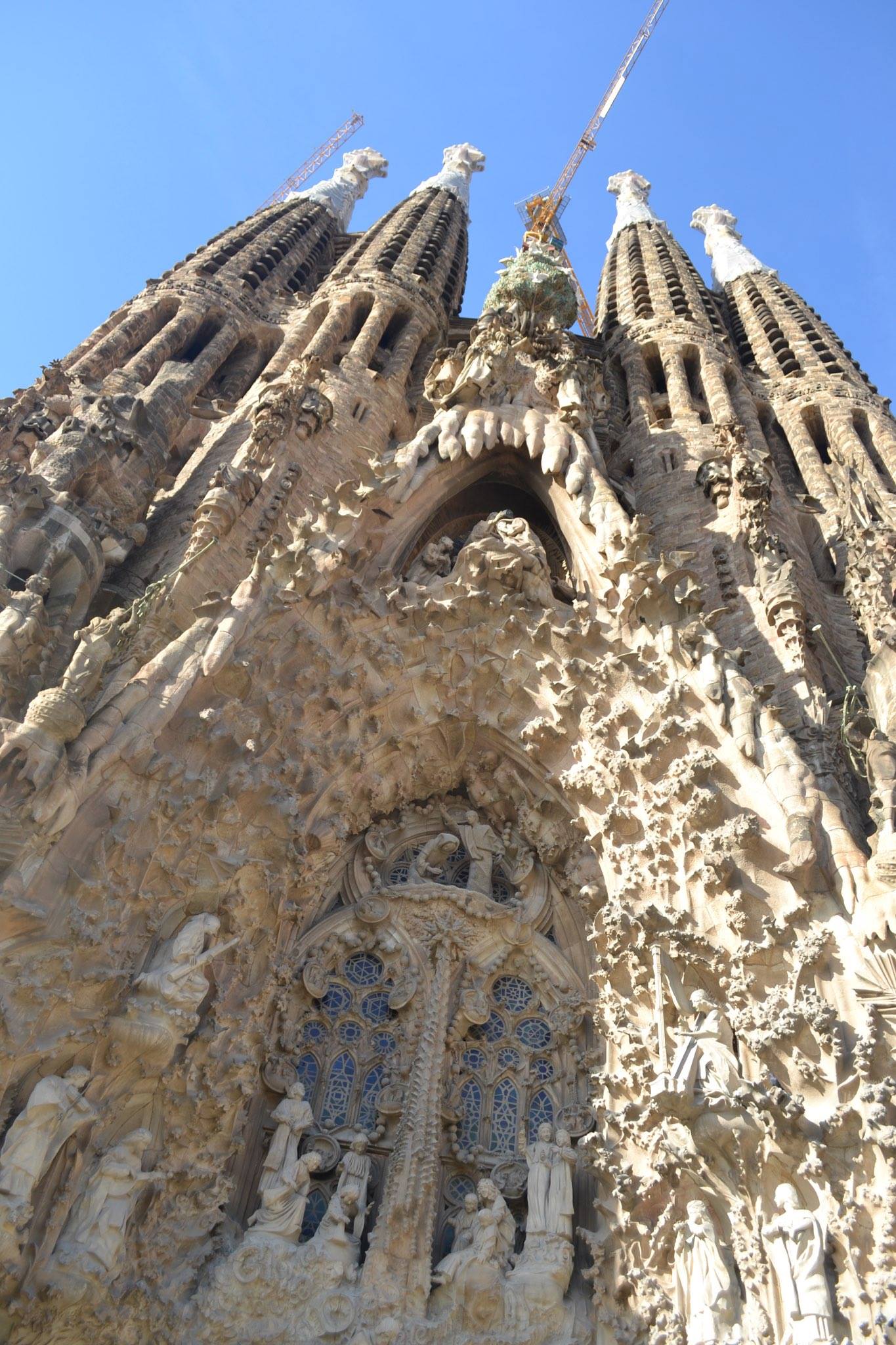
Sagrada_Familia_Ash

London’s First Muslim Mayor – A Landmark Event!

London’s First Muslim Mayor – A Landmark Event!

A Major Western Capital Gets A First Muslim Mayor! Landmark Event !

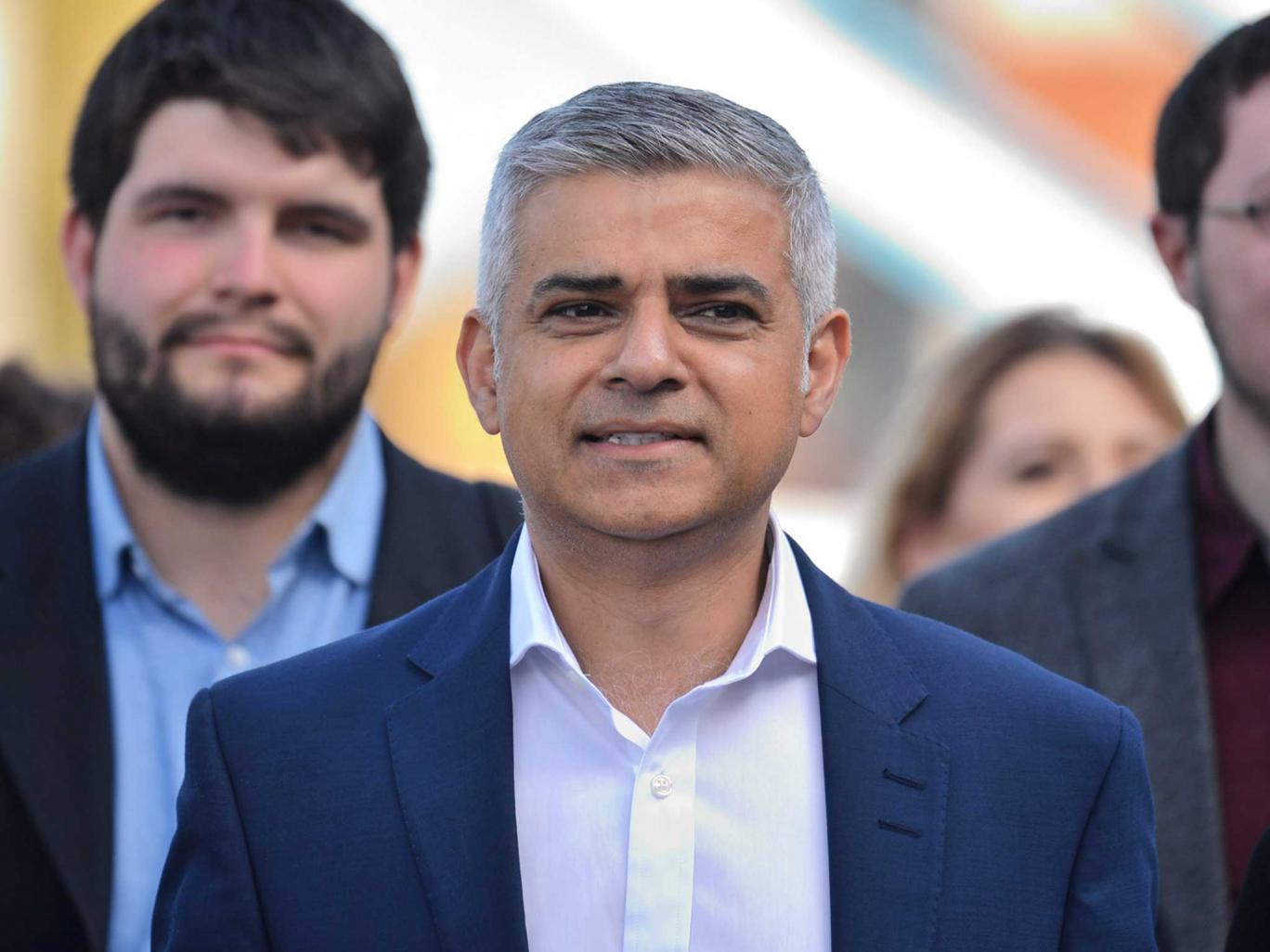
London get its first muslim mayor as Sadiq Khan storms the city halls !

Sadiq was indeed the frontrunner candidate who ran a positive, organised and focused campaign. He did not allow the Labour leadership issues of his party affect his path. Attempts by competitor Zac Goldsmith to link Sadiq to extremists and divide the electorate backfired.

It is indeed a global event as million of London voted for the best candidate. A strong message in today’s troubled times. Especially after Paris and Brussels attacks, the significance of a London Muslim mayor is even greater.

But Sadiq won because he was authentic and identified the real issues – affordable housing, rising cost of living etc. He has promised zero rise in transport fares. He has promise to make Oxford Street a pedestrian street. So he won on his ideas and the merit of his ideas.

It again proves that London is a truly meritocratic, professional and civil society – hence it is the global talent magnet. The spirit of London has won !

And our London mayor’s favourite London landmark – The Swaminarayan Temple in Wembley!

1 47 48 49 50 51 52 53 194