21 Lessons For The 21st Century

Book Review: 21 Lessons For The 21st Century by Yuval Harari

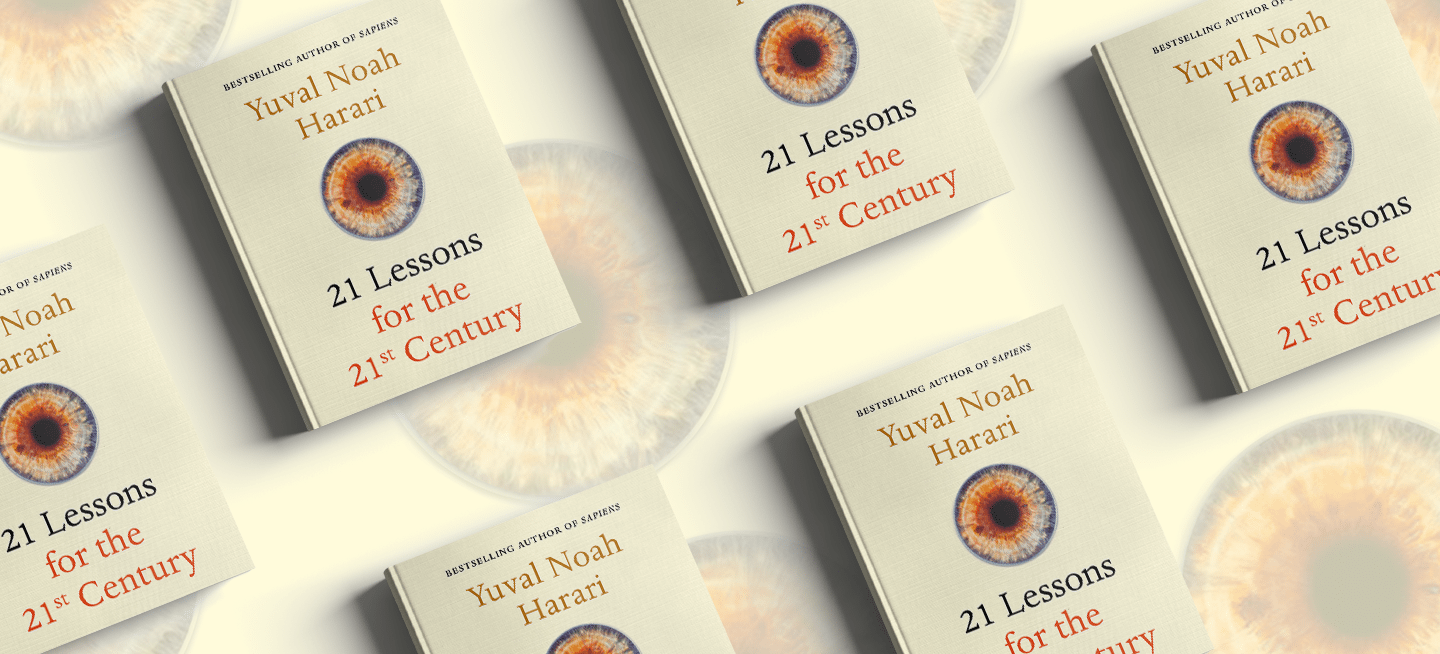
The highly stimulating and inspiring Yuval Noah Harari is back! His latest book ‘21 Lessons for the 21st Century‘ completes his trilogy. While his previous best sellers, Sapiens and Homo Deus explored the past and the future respectively, 21 Lessons focusses on the present and contemporary topics.

I read the book on a long SFO-Delhi flight in one reading, amidst the chaos of Brexit and US-China trade tensions. I was returning from an annual planning pilgrimage where we were trying to look at the crystal ball and make our bets. So, the topic of knowing the present and the modern challenges made a lot of sense. The book’s cover jacket and introduction indeed made the right claims:

How can we protect ourselves from nuclear war and technological disruptions? What are today’s greatest challenges and choices? What should we pay attention to? Are we still capable of understanding the world we have created? What should we teach our children?

The book is divided into 21 chapters over 5 different sections and cover topics Work, Terrorism, Immigration, Nationalism, War God, Fake News, Education etc. So how does the book measure up? Does it rise up to the claims?

The vegan smartphone-less Yuval Noah indeed makes a compelling reading. His wide knowledge and deep intellect are evident in his strong claims. The contemporary examples quickly relate and establish a shared platform for arguments. It offers interesting insights and ideas to provoke further thinking and find answers. Sample this:

1. Donald Trump warned voters that the Mexicans and Chinese will take their jobs, and that they could therefore build a wall on the Mexican border. He never warned voters that the algorithms will take their jobs, nor did he suggest building a firewall on the border with California. True indeed. It is very easy to create a narrative and channelize resources against a visible threat, but what about the larger invisible challenges. It is easy for Donald Trump to talk about Mexicans but how do we prepare to deal humanity with the challenges arising from the confluence of AI and Biotech? The same thing is happening across the world.

2. The Russian, Chinese and Cuban revolution were made by people who were vital for the economy and lacked political power. But Trump and Brexit were supported by people who enjoyed political power and were afraid to lose the economic power.

3. Humans vote with their feet. Which countries do people want to emigrate to? It tells the answer for the future. People want to move to USA, Germany, Canada, Australia.

4. Why terrorism makes headlines? Because the world has become a safer place as compared to the past and any new acts of violence makes more noise. Terrorists are successful because they are like a small fly that can drive a large mad bull to smash up a china shop. That is exactly what 9/11 did. It drove US to smash up Middle East. Terrorism requires action on three fronts: state action against terrorist networks, responsible media management and individual self-restraint.

5. Humans have two types of abilities – physical and cognitive. In the past, machines competed with humans mainly in the raw physical abilities, while humans retained an immense edge in raw physical abilities. Today, machines are taking over human beings even in the cognitive abilities. So how can humans retain an edge over machines?

6. Artificial intelligence and biotech are the future and will change humanity. Are we ready for it?

7. Self-driving cars are safer, but will we understand that? Shall we protect people, or shall we protect jobs? The jobs in Bangladesh and Bangalore will be lost soon. How do we train the redundant workforce? It was easier for farm labourer to become industrial worker or retail help as it required very less significant training. What happens in the future when jobs are becoming very specialised?

8. The rich are becoming richer, but they may become superior and more talented as well in the future. There will be a rise of “useless” class of people. What are the implications for the society and humanity?

9. The climate change will be good news for Russia.

Does the book offer solutions? Yes and no. It offers high level solutions – universal basic income, globalisation of politics, meditation etc. However, if one is looking for practical and innovative solutions, there are very few. And it is not Yuval Noah’s fault – nobody has got the answers right to these questions. At least he has identified the right questions to find answers for and given some initial thoughts. He wants us to debate and find our own answers.

The book is a good read and a recommended reading. But first do read Homo Deus and Sapiens as well.

And then let us meet and brainstorm…

Further Reading:
Yuval Noah Harari Official Website
Yuval Noah on YouTube

Image Courtesy: www.ynharari.com

The Future Of Fintech

Technological changes and overall trends are often difficult to predict. What seems as the obvious future often fails to deliver, and new innovations take over! Look around and many of the technological tools that we take for granted, were never predicted…The Fintech world continues to present new ideas, solutions and business models.

The future of Fintech, money and payments is linked to the evolution of the society. In next 10-20 years, we may see the emergence of robots, machine to machine interaction, smart cities, universal basic economy, ageing population, climate change and prosperous mankind.

In that age, payments between machines will be automatic and invisible. Cashless economy will be a reality with secure, invisible, hyper-connected, data-driven money and payment system becoming a backbone like internet and electricity.

Payments will be integrated as a part of buying experience. Pricing and offers will be specific to you as per your financial score. Secure micro-payments will be order of the day. Micro-payments will also mean more access to everyone.

Technological innovations in payment will allow the remaining less-privileged to get access to basic income and help from across the world. The credit scoring, mortgage options etc. all will be seamless and real-time.

Property will be tokenized. Agricultural land will be tokenized. Equity tokenization will unlock liquidity. Blockchain will be leveraged for tokenization in the future and new business models will emerge. Privacy, legal and security frameworks will ensure the required safeguards.

Quick and easy barter mechanisms will become an alternative to the money economy.

The cumulative effect will be help unbanked and underbanked individuals and SMEs to get benefits of the financial system and accelerate job creation, equitable and balanced economic growth.

Image Credit: Joshua Reddekopp on Unsplash

My Impressions Of Nandita Das’ Manto

I got introduced to Saadat Hasan Manto when I read Toba Tek Singh in school while studying the partition of India. Khushwant Singh’s Train To Pakistan and Govind Nilhalani’s Tamas completed my partition trilogy. (Tamas’ author is Bhisham Shahni and I watched the Doordarshan masterpiece).

Manto kept on resurfacing at regular intervals and his impact grew on me with the passage of time. Thanda Ghosht and Khol Do threw light on monstrous brutalities committed by fellow human beings in the name of partition.

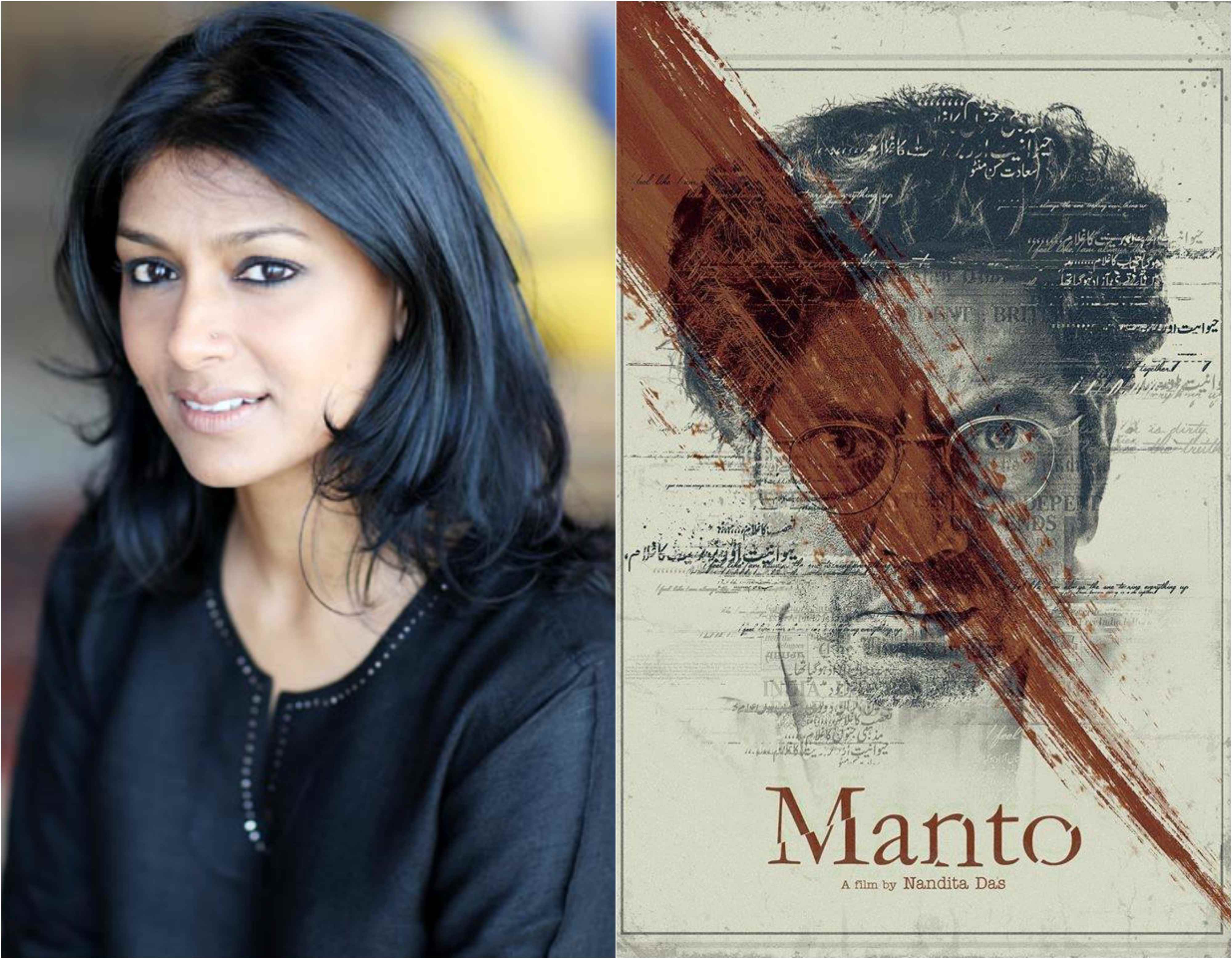
Nandita Das brings Manto back into the spotlight – a much awaited film on the genius by a sensitive and intellectual director.

Nandita’s Manto depicts his journey from pre-Independent British India to post-partition India and a newly formed Pakistan. The movie’s initial focus is on Manto’s Bollywood days, friendship with Ismat Chughtai, family time with wife Safiya etc. One gets a glimpse of Bollywood personalities, Manto’s fearless voice, his empathy for the less elite members of the society and the power of his words. Post India’s independence, the evil partition divides a newly reborn country. After a brief time in Bombay, Manto moves to Pakistan. The loss of Bombay and the scars of partition slowly affect him and break him down. Liquor and cigarettes become his fast friends and he stops writing back to his friends in Bombay. His pen is still brutally naked and focusses on the monstrous human behavior. He is charged with a case of obscenity in Pakistan and he loses it. The progressive writers also attack him, and he finds himself in a minority. Eventually he goes to an asylum for de-addiction.

Returning after a decade to the director’s chair, Nandita Das provides a very touching portrayal of the man behind the author and his eventual breakdown. She depicts Manto’s struggles, pains and heartbreak with total empathy. Her hard-work in research is very evident.

Nawazuddin Siddiqui is at the top of his game. He looks and plays the attitude of Saadat Hasan Manto with great effectiveness. Manto is a new breaking ground for Nawazuddin, who has mastered the thriller and gangster space. Rasika Duggal is a perfect companion to Manto and she provides the right anchor. She is silent, spirited, strong and dignified. The supporting cast includes stalwarts like Paresh Rawal, Divya Dutta, Rishi Kapoor, Ranvir Shoerey, Javed Akhtar, Ila Arun, Gurdaas Maan, Niraj Kabi etc. Tahir Bhasin shines as Manto’s friend/superstar Shyam. It is worth noting that most of the stars have done the film at zero or minimal cost. Nawaz has charged only Re 1 for the movie. The movie’s production values, art, costume music and background score are world-class and in perfect sync with the movie’s tone. ‘Bol Ke Lab Azaad Hai Tere’ is an anthem!

Manto’s screenplay is the real highlight of the movie. The dialogues are designed to keep you thinking. Sample this:

“Agar aap mere afsaano ko bardasht nahi kar sakte, toh iska matlab yeh hai ke zamaana hi naakabil-e-bardaasht hai”.

“Meri kahaaniyon ko main ek aaina samajhta hoon jismein samaaj apne aap ko dekh sake. Aur kisi buri surat waale ko aaine se hi shikayat ho toh usmein mera kya kasoor?”

“ When religion moves from hearts to head, people start wearing religious caps”

The scenes are very well-designed and thoughtful. Take a very simple scene at the start of the movie – where Manto and Safiya are sitting in a park and discussing about a woman’s facial hair. A simple park banter speaks of their companionship, Manto’s imagination and simplicity of their lives.

Or another scene in which prompts Manto to move to Pakistan. His friend is trying to stop him from going to Pakistan. He argues and says that Manto is not a Muslim enough (in reference to his alcoholic habits). Manto retorts that he is a Muslim enough to be killed. The scene delivers in the message in the most thundering silent way!

Manto’s sensitivity is seen in another scene. He is hurt when Faiz Ahmed Faiz defends Manto’s writing as not obscene, but he also remarks that Manto’s work is not literature. He keeps on thinking about this comment in garden. His daughter’s sickness and his apology to Safiya really affect you – why does he have to suffer!

Nandita weaves Manto’s famous stories into the main narrative with great dexterity but I found the stories to be too brief and directly striking the key message. I understand Nandita never wanted to talk about the stories because everyone knows them – she was highlighting the context and inspiration of those stories. But I would have loved to see Nandita’s Midas touch to these timeless stories.

Many of us do not know Gandhi, so to expect people to be aware of Manto is an important assumption. The movie’s promos and Mantoiyat theme had created an impression of a strong, courageous and larger-than-life Manto. People were expecting more fiery stuff whereas the movie showcased only the few years of Manto’s life. This created an expectation vs reality gap. But it is director’s prerogative to choose what to showcase. The chosen aspect of life is more difficult to showcase. More importantly, it is more significant to be showcased – how a creative genius withers away!

The post millennial generation cannot relate to DevDas and even Gandhi has to be wrapped in Gandhigiri. So, the film came across as a little gloomy and melancholic.

But I should not speak for everyone. Manto would not be happy. He would rebuke me and rightly so! (Remember the Lahore scene. Manto speaks to bibliophiles in Lahore and a member of the audience remarks that readers find Manto’s work dark. Manto rebukes the person for speaking for all readers instead of himself. An important point made when we often see people speaking for entire populace. )

I loved Manto. It is a class act. It is a rare gem. It is one of the fine works of recent times. Its grows on you! And it really makes you think!

“Jab ghulam the, toh aazaadi ka khwaab dekhte the. Aur ab aazaad hai, toh kaunsa khwaab dekhenge?”

The impact and importance of the movie is beyond the box-office numbers!

Watch it! Do not miss it!

Live To Give!

Live To Give!

Ten years ago, it started as a humble thought but little did I know that ‘Live To Give’ will become a motto and a defining philosophy for me!

Over the years, it has taken different forms:
– Spending time and energy behind worthy people, organisations and causes
– Mentoring and helping students, friends, colleagues, relatives and budding entrepreneurs  
– Providing intellectual, network and financial capital
– Evangelising causes
– Cheer leader

It has been a mutually rewarding and soul-enriching act. It has been a great learning experience as well. It is a challenging act as demands on time and energies keep increasing in all domains of life – but it is worth it!

I was discussing this personal philosophy with some young friends and it prompted to check the original note of ‘Live To Give’….still holds true! (And inspired this post!)

The Original 2008 Founding Version of ‘Live To Give’

Live To Give!

If I can stop one heart from breaking, 

I shall not live in vain; 

If I can ease one life the aching, 

Or cool one pain, 

Or help one fainting robin 

Unto his nest again, 

I shall not live in vain.

: Emily Dickinson

‘Live To Give’ is a concept of giving back to society. Whatever way. Whatever time. Helping anyone. 
 
‘Live To Give’ is not an organisation, it is a mantra for life. We have to leave the world by giving more than we received from it. We have to leave every place by making it better than what we found it. 
 
‘Live To Give’ is an idea to get people to help each other. Organisations, individuals can help in any manner they deem fit. If you are good in accounts, please help an old age home to manage its accounts. If you are good in technology, help someone to learn computers. If you are good in marketing, please help the neighbourhood library to add more members. If you love children, visit orphanages and spread joy. If you are well-connected, connect the have-nots with haves. The haves will be thankful. However, ‘Live To Give’ is not helping just the have-nots or the non-elite. Not at all!

‘Live To Give’ is a way of life. Give wherever you can. Give your best at work place. Give your best at home. Give your best to the fellow passenger on train. Give your best to the stranger looking for directions. Give your best to the friend in your life.

What will matter the most to us? How much did we earn or what difference we made in the environment?

Image Courtesy: Photo by Lina Trochez and Thought Catalog on Unsplash

1 38 39 40 41 42 43 44 194