Nokia – Microsoft Alliance – Will It Work?

Desperate Times Call For Innovative Thinking. Is Nokia’s Alliance With Microsoft The Right Move? Or Is It An Act of Desperation?

Both Need Each Other ! Microsoft needs a player like Nokia since its Windows Mobile OS has not really set things on fire. It is a small player in the field dominated by Android, Apple and RIM. Nokia has been losing market share and mind share. Its confusion is evident from its actions on Symbian, Maemo, Meego. It really need someone else to develop the OS while it focussed on the hardware side. For both of them, this is indeed a move necessitated by market dynamics, but while consumers bite?

Do you think the Nokia-Microsoft Alliance will work? Will Nokia reclaim its glory? The drama is as exciting as the mobile space !

Related News:
Wall Street Journal Article:

Nokia CEO’s Letter To Employees:

CEO Says Nokia Needs Big Change – Feb 9, 2011

Hello there,

There is a pertinent story about a man who was working on an oil platform in the North Sea. He woke up one night from a loud explosion, which suddenly set his entire oil platform on fire. In mere moments, he was surrounded by flames. Through the smoke and heat, he barely made his way out of the chaos to the platform’s edge. When he looked down over the edge, all he could see were the dark, cold, foreboding Atlantic waters.

As the fire approached him, the man had mere seconds to react. He could stand on the platform, and inevitably be consumed by the burning flames. Or, he could plunge 30 meters in to the freezing waters. The man was standing upon a “burning platform,” and he needed to make a choice.

He decided to jump. It was unexpected. In ordinary circumstances, the man would never consider plunging into icy waters. But these were not ordinary times – his platform was on fire. The man survived the fall and the waters. After he was rescued, he noted that a “burning platform” caused a radical change in his behaviour.

We too, are standing on a “burning platform,” and we must decide how we are going to change our behaviour.

Over the past few months, I’ve shared with you what I’ve heard from our shareholders, operators, developers, suppliers and from you. Today, I’m going to share what I’ve learned and what I have come to believe.

I have learned that we are standing on a burning platform.

And, we have more than one explosion – we have multiple points of scorching heat that are fuelling a blazing fire around us.

For example, there is intense heat coming from our competitors, more rapidly than we ever expected. Apple disrupted the market by redefining the smartphone and attracting developers to a closed, but very powerful ecosystem.

In 2008, Apple’s market share in the $300+ price range was 25 percent; by 2010 it escalated to 61 percent. They are enjoying a tremendous growth trajectory with a 78 percent earnings growth year over year in Q4 2010. Apple demonstrated that if designed well, consumers would buy a high-priced phone with a great experience and developers would build applications. They changed the game, and today, Apple owns the high-end range.

And then, there is Android. In about two years, Android created a platform that attracts application developers, service providers and hardware manufacturers. Android came in at the high-end, they are now winning the mid-range, and quickly they are going downstream to phones under €100. Google has become a gravitational force, drawing much of the industry’s innovation to its core.

Let’s not forget about the low-end price range. In 2008, MediaTek supplied complete reference designs for phone chipsets, which enabled manufacturers in the Shenzhen region of China to produce phones at an unbelievable pace. By some accounts, this ecosystem now produces more than one third of the phones sold globally – taking share from us in emerging markets.

While competitors poured flames on our market share, what happened at Nokia? We fell behind, we missed big trends, and we lost time. At that time, we thought we were making the right decisions; but, with the benefit of hindsight, we now find ourselves years behind.

The first iPhone shipped in 2007, and we still don’t have a product that is close to their experience. Android came on the scene just over 2 years ago, and this week they took our leadership position in smartphone volumes. Unbelievable.

We have some brilliant sources of innovation inside Nokia, but we are not bringing it to market fast enough. We thought MeeGo would be a platform for winning high-end smartphones. However, at this rate, by the end of 2011, we might have only one MeeGo product in the market.

At the midrange, we have Symbian. It has proven to be non-competitive in leading markets like North America. Additionally, Symbian is proving to be an increasingly difficult environment in which to develop to meet the continuously expanding consumer requirements, leading to slowness in product development and also creating a disadvantage when we seek to take advantage of new hardware platforms. As a result, if we continue like before, we will get further and further behind, while our competitors advance further and further ahead.

At the lower-end price range, Chinese OEMs are cranking out a device much faster than, as one Nokia employee said only partially in jest, “the time that it takes us to polish a PowerPoint presentation.” They are fast, they are cheap, and they are challenging us.

And the truly perplexing aspect is that we’re not even fighting with the right weapons. We are still too often trying to approach each price range on a device-to-device basis.

The battle of devices has now become a war of ecosystems, where ecosystems include not only the hardware and software of the device, but developers, applications, ecommerce, advertising, search, social applications, location-based services, unified communications and many other things. Our competitors aren’t taking our market share with devices; they are taking our market share with an entire ecosystem. This means we’re going to have to decide how we either build, catalyse or join an ecosystem.

This is one of the decisions we need to make. In the meantime, we’ve lost market share, we’ve lost mind share and we’ve lost time.

On Tuesday, Standard & Poor’s informed that they will put our A long term and A-1 short term ratings on negative credit watch. This is a similar rating action to the one that Moody’s took last week. Basically it means that during the next few weeks they will make an analysis of Nokia, and decide on a possible credit rating downgrade. Why are these credit agencies contemplating these changes? Because they are concerned about our competitiveness.

Consumer preference for Nokia declined worldwide. In the UK, our brand preference has slipped to 20 percent, which is 8 percent lower than last year. That means only 1 out of 5 people in the UK prefer Nokia to other brands. It’s also down in the other markets, which are traditionally our strongholds: Russia, Germany, Indonesia, UAE, and on and on and on.

How did we get to this point? Why did we fall behind when the world around us evolved?

This is what I have been trying to understand. I believe at least some of it has been due to our attitude inside Nokia. We poured gasoline on our own burning platform. I believe we have lacked accountability and leadership to align and direct the company through these disruptive times. We had a series of misses. We haven’t been delivering innovation fast enough. We’re not collaborating internally.

Nokia, our platform is burning.

We are working on a path forward — a path to rebuild our market leadership. When we share the new strategy on February 11, it will be a huge effort to transform our company. But, I believe that together, we can face the challenges ahead of us. Together, we can choose to define our future.

The burning platform, upon which the man found himself, caused the man to shift his behaviour, and take a bold and brave step into an uncertain future. He was able to tell his story. Now, we have a great opportunity to do the same.

Stephen.
Are You On Speed-Dial List?

Each individual has a different definition of success, purpose and achievement. It could be the glorious pay packet, coveted designation, corner cabin, signature villa on an island, cover photo on business magazine, invite for dinner with visiting US President, patents awarded, etc.

But what is more important?Being there for your friend when he needs you the most? Helping strangers with your kindness and time? Donating time to causes you believe in? Spreading ideas? Being a good citizen? Being reliable and dependable for bosses and subordinate? Being the 2AM person for cousins? Being on the speed-dial list of people?

I believe small deeds done are better than great ideas planned. Spreading smiles is an achievement in itself. Touching lives and making a difference to environment is a purpose accomplished.

Mentoring Rendezvous: Ahmedabad 29th January

CIIE (Centre for Innovation Incubation and Entrepreneurship) at IIM Ahmedabad, as a part of its ‘MentorEdge’ initiative, will be hosting its second ‘Mentoring Rendezvous’ in Ahmedabad on the 29th January 2011. This would provide an opportunity for start-ups to interact with the mentors and other like minded people.

So if you are an Entrepreneur and interested in joining the program as a Mentee then apply under the Mentees Tab on the website on or before the 23rd January. CIIE shall confirm the participation & schedules latest by the 24th of January.

The following mentors have already confirmed their presence and their profiles can be found from the MentorEdge Website

Chirag Patel
Prof. Arvind Sahay
Alay Desai
Mukesh Sharma
Sunil Shah
PVRN Iyer
Parag Bhatt
Paresh Vasani
Ruzan Khambatta

For more information, please get in touch with CIIE’s Gourav :
gouravk@iimahd.ernet.in
+91- 9586557996

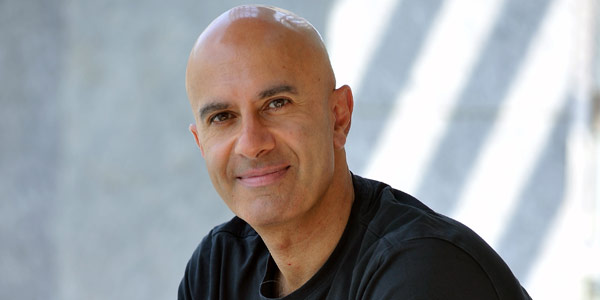
Robin Sharma’s “The 73 Best Lessons I’ve Learned for Leadership Success in Business and Life”

I recently read Robin Sharma’s “The 73 Best Lessons I’ve Learned for Leadership Success in Business and Life”. Robin Sharma is author of the international bestseller of “The Monk Who Sold His Ferrari” and “The Leader Who Had No Title”.

I am sharing the post here :

1. You can really Lead Without a Title.
2. Knowing what to do and not doing it is the same as not knowing what to do.
3. Give away what you most wish to receive.
4. The antidote to stagnation is innovation.
5. The conversations you are most resisting are the conversations you most need to be having.
6. Leadership is no longer about position – but passion. It’s no longer about image but impact. This is Leadership 2.0.
7. The bigger the dream, the more important to the team.
8. Visionaries see the “impossible” as the inevitable.
9. All great thinkers are initially ridiculed – and eventually revered.
10. The more you worry about being applauded by others and making money, the less you’ll focus on doing the great work that will generate applause. And make you money.
11. To double your net worth, double your self-worth. Because you will never exceed the height of your self-image.
12. The more messes you allow into your life, the more messes will become a normal (and acceptable) part of your life.
13. The secret to genius is not genetics but daily practice married with relentless perseverance.
14. The best leaders lift people up versus tear people down.
15. The most precious resource for businesspeople is not their time. It’s their energy. Manage it well.
16. The fears you run from run to you.
17. The most dangerous place is in your safety zone.
18. The more you go to your limits, the more your limits will expand.
19. Every moment in front of a customer is a gorgeous opportunity to live your values.
20. Be so good at what you do that no one else in the world can do what you do.
21. You’ll never go wrong in doing what is right.
22. It generally takes about 10 years to become an overnight sensation.
23. Never leave the site of a strong idea without doing something to execute around it.
24. A strong foundation at home sets you up for a strong foundation at work.
25. Never miss a moment to encourage someone you work with.
26. Saying “I’ll try” really means “I’m not really committed.”
27. The secret of passion is purpose.
28. Do a few things at mastery versus many things at mediocrity.
29. To have the rewards that very few have, do the things that very few people are willing to do.
30. Go where no one’s gone and leave a trail of excellence behind you.
31. Who you are becoming is more important than what you are accumulating.
32. Accept your teammates for what they are and inspire them to become all they can be.
33. To triple the growth of your organization, triple the growth of your people.
34. The best leaders are the most dedicated learners. Read great books daily. Investing in your self-development is the best investment you will ever make.
35. Other people’s opinions of you are none of your business.
36. Change is hardest at the beginning, messiest in the middle and best at the end.
37. Measure your success by your inner scorecard versus an outer one.
38. Understand the acute difference between the cost of something and the value of something.
39. Nothing fails like success. Because when you are at the top, it’s so easy to stop doing the very things that brought you to the top.
40. The best leaders blend courage with compassion.
41. The less you are like others, the less others will like you.
42. You’ll never go wrong in doing what’s right.
43. Excellence in one area is the beginning of excellence in every area.
44. The real reward for doing your best work is not the money you make but the leader you become.
45. Passion + production = performance.
46. The value of getting to your goals lives not in reaching the goal but what the talents/strengths/capabilities the journey reveals to you.
47. Stand for something. Or else you’ll fall for anything.
48. Say “thank you” when you’re grateful and “sorry” when you’re wrong.
49. Make the work you are doing today better than the work you did yesterday.
50. Small daily – seemingly insignificant – improvements and innovations lead to staggering achievements over time.
51. Peak performers replace depletion with inspiration on a daily basis.
52. Take care of your relationships and the sales/money will take care of itself.
53. You can’t be great if you don’t feel great. Make exceptional health your #1 priority.
54. Doing the difficult things that you’ve never done awakens the talents you never knew you had.
55. As we each express our natural genius, we all elevate our world.
56. Your daily schedule reflects your deepest values.
57. People do business with people who make them feel special.
58. All things being equal, the primary competitive advantage of your business will be your ability to grow Leaders Without Titles faster than your industry peers.
59. Treat people well on your way up and they’ll treat you well on your way down.
60. Success lies in a masterful consistency around a few fundamentals. It really is simple. Not easy. But simple.
61. The business (and person) who tries to be everything to everyone ends up being nothing to anyone.
62. One of the primary tactics for enduring winning is daily learning.
63. To have everything you want, help as many people as you can possibly find get everything they want.
64. Understand that a problem is only a problem if you choose to view it as a problem (vs. an opportunity).
65. Clarity precedes mastery. Craft clear and precise plans/goals/deliverables. And then block out all else.
66. The best in business spend far more time on learning than in leisure.
67. Lucky is where skill meets persistence.
68. The best Leaders Without a Title use their heads and listen to their hearts.
69. The things that are hardest to do are often the things that are the best to do.
70. Every single person in the world could be a genius at something, if they practiced it daily for at least ten years (as confirmed by the research of Anders Ericsson and others).
71. Daily exercise is an insurance policy against future illness. The best Leaders Without Titles are the fittest.
72. Education is the beginning of transformation. Dedicate yourself to daily learning via books/audios/seminars and coaching.
73. The quickest way to grow the sales of your business is to grow your people.

Robin Sharma is the bestselling author of “The Monk Who Sold His Ferrari” and “The Leader Who Had No Title: A Modern Fable on Real Success in Business and Life.” Great Must-Read books!

1 107 108 109 110 111 112 113 194